Quick answer
What buyers need to know
The kids wear manufacturing process moves through seven connected stages: product brief, material selection, pattern and fit development, sampling, cutting and stitching, quality control, and packing with dispatch. The strongest results come when fit, comfort, construction and commercial targets are agreed before bulk production begins.
Key takeaways
- Approve the product brief, size chart and sample before bulk production.
- Judge fabric and trims for the garment’s real use—not appearance alone.
- Build quality checks into each stage instead of relying only on a final inspection.
- Keep approved references and packing instructions clear for repeat orders.
1. Start with a commercial product brief
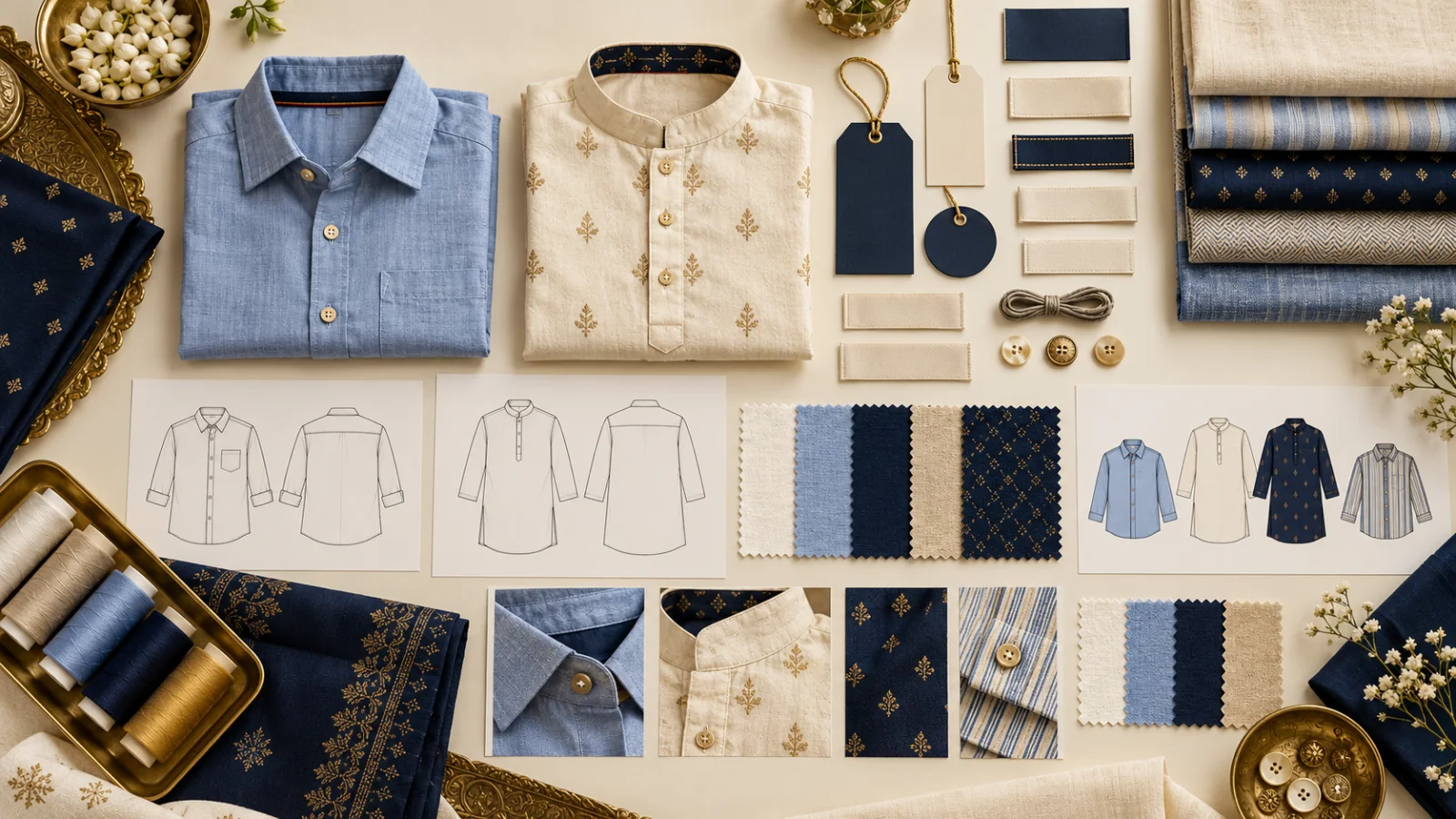
Manufacturing begins before any fabric is cut. A useful brief explains the customer, age group, selling season, category, intended price position, size range, colours and expected quantity. A retailer asking for “a festive set” leaves too much open to interpretation; a brief for comfortable boys’ festive sets for wedding and festival retail gives the design team a much clearer direction.
Reference images can communicate a mood, but they should not replace specifications. Note the silhouette, garment components, functional details, embellishment level and packaging requirement. This becomes the working reference for the buyer, merchandiser and production team.
- Target age and size range
- Product category and intended occasion
- Colour and fabric direction
- Quantity, delivery window and packing needs
2. Select fabric and trims for the use case
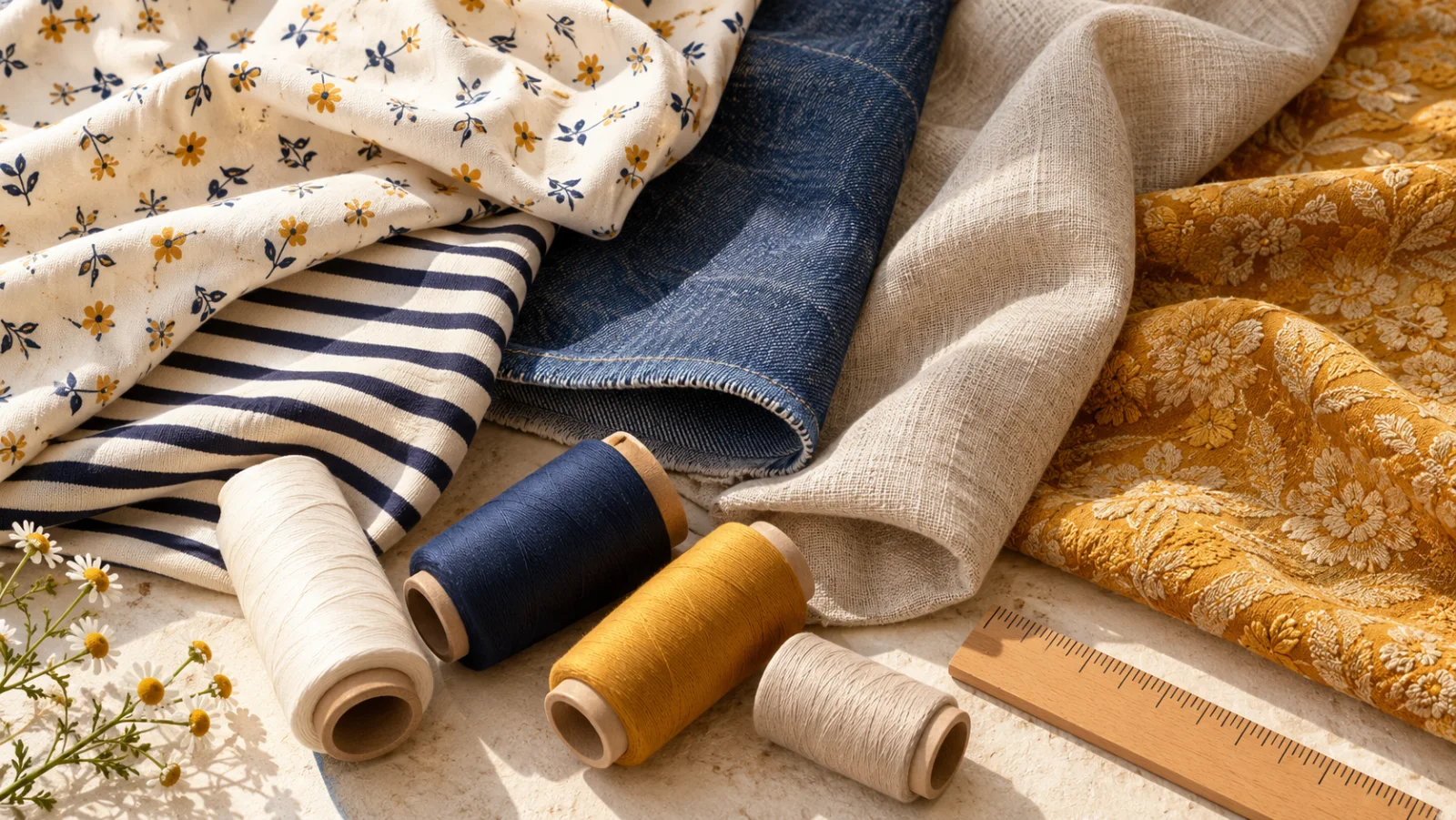
Material choice affects comfort, drape, durability, cost and how a garment behaves during stitching. Everyday sets may need easy movement and practical care. Occasionwear may need visual depth while still protecting the child from rough surfaces or uncomfortable internal seams.
Buttons, zips, elastic, thread, lining and decorative components should be reviewed with the main fabric—not added as an afterthought. Our guide to the best fabrics for kids clothing explains how to compare common options by product use.
3. Develop patterns, size grading and fit
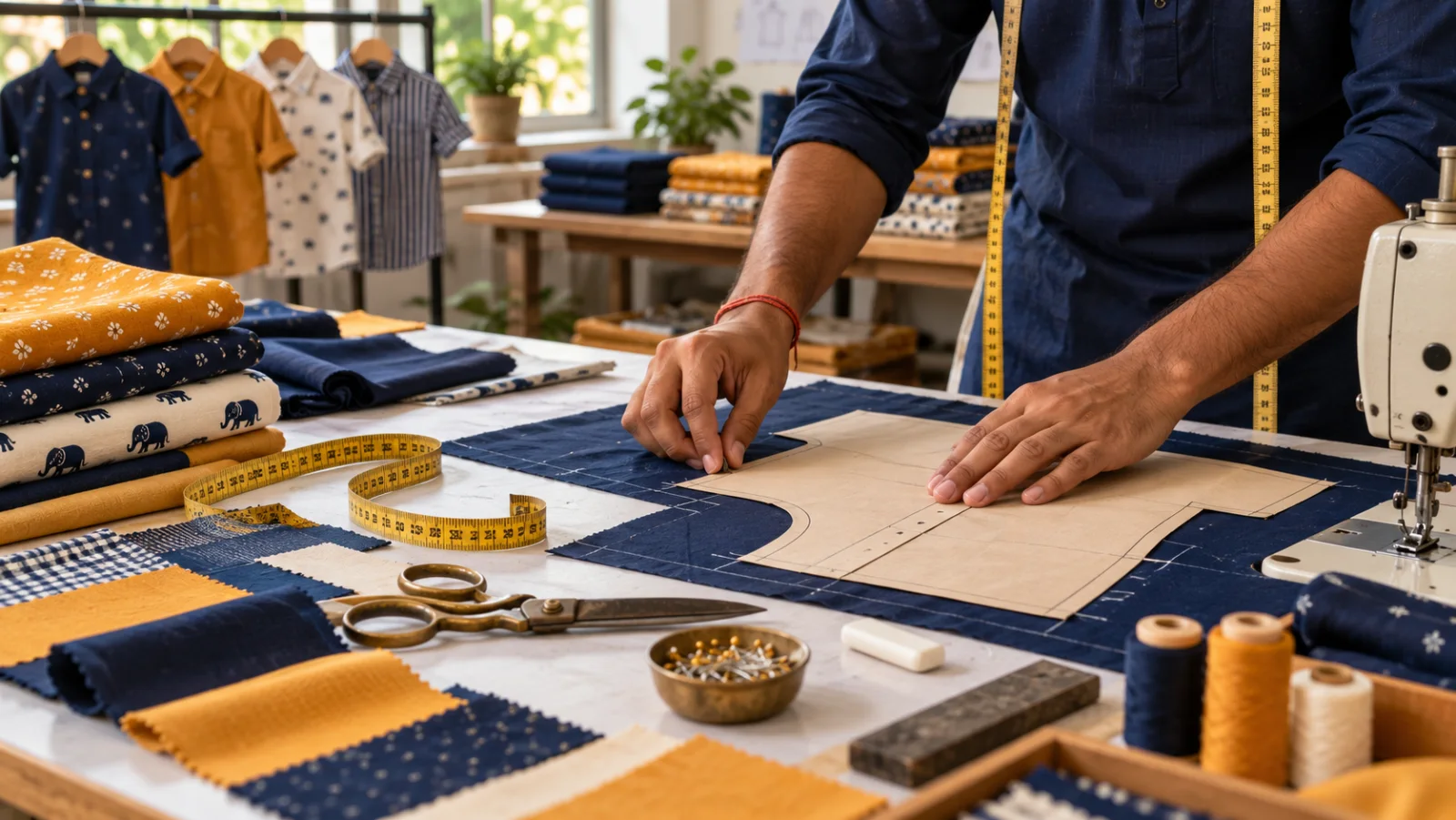
A pattern converts the design into precise garment pieces. The base size is developed first, then graded across the approved size range. Children’s proportions change across age groups, so grading should be deliberate rather than a simple uniform enlargement.
A fit review checks mobility, garment balance, neck and armhole comfort, length, closure placement and how layered pieces work together. The approved size chart and pattern must stay controlled once bulk cutting begins.
4. Make and approve the sample
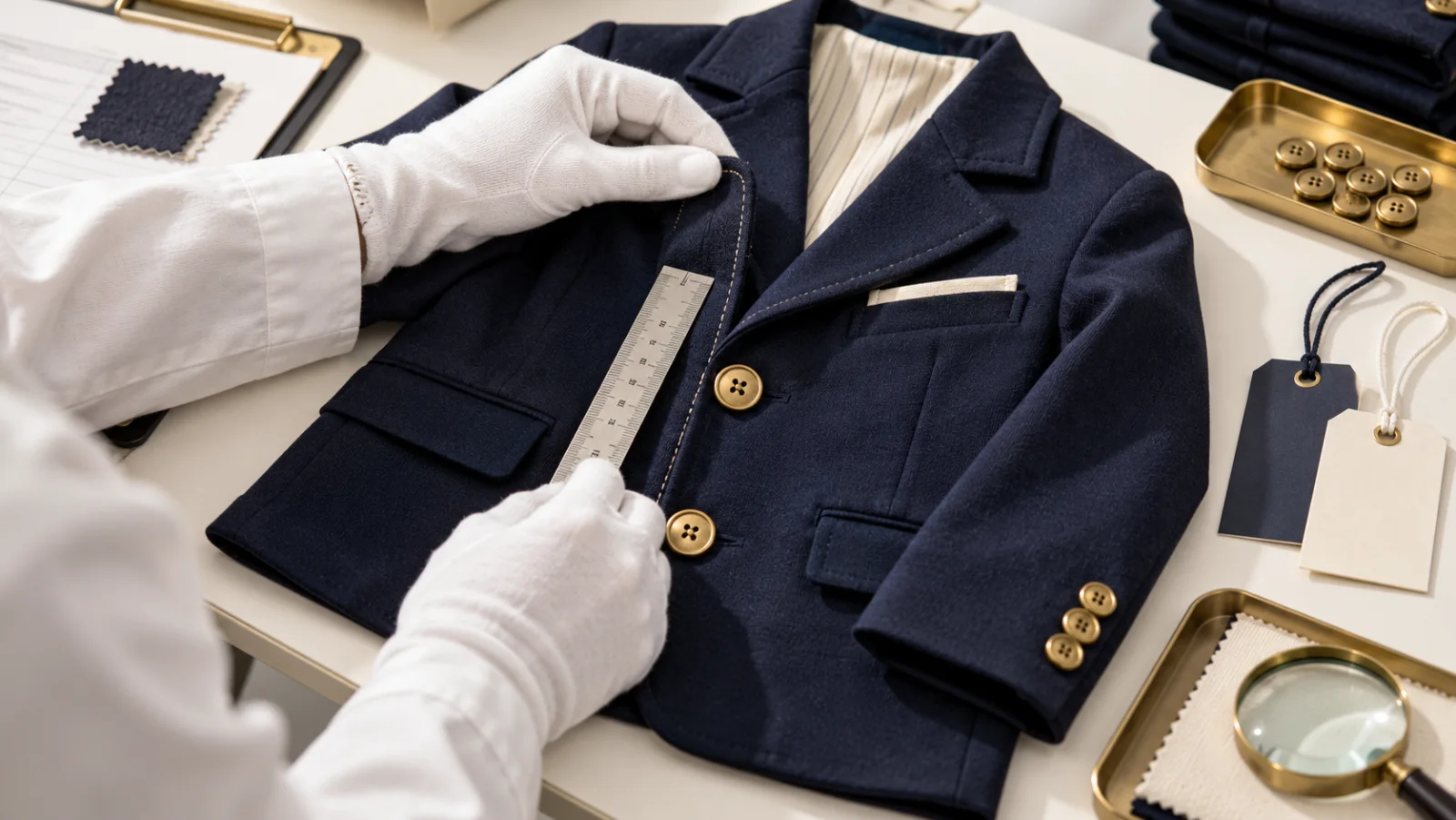
The sample is where the drawing becomes a physical product. It reveals issues that are difficult to judge on paper: fabric behaviour, stiffness, seam bulk, proportion, colour balance and finishing. Comments should be consolidated into one clear approval round so that the next sample reflects a single decision set.
For a private-label programme, this is also the point to verify label placement, hang tags and other brand details. Read our private label kids clothing guide before preparing that brief.
5. Plan cutting and bulk production
After approvals, the production team plans material consumption, cutting, operation sequence and line loading. Fabric is spread and cut according to the controlled pattern. Cut parts are bundled so sizes and components remain together as they move through stitching.
Good production control is less about rushing and more about preventing variation. An approved sample, construction notes and in-line checkpoints give operators and supervisors the same reference.
6. Inspect construction, measurements and finishing
Quality control should happen during production and after finishing. Teams review measurements, seam appearance, attachment strength, matching components, surface marks, pressing and presentation. Problems found early can be corrected before they affect an entire lot.
Use the detailed kids wear quality control checklist to build a practical inspection plan for your own orders.
7. Pack, document and dispatch
Final pieces are sorted by style, colour and size, then packed to the agreed method. Carton markings and quantity summaries should help the buyer receive and allocate stock accurately. Dispatch planning also needs the destination, transport method and receiving constraints.
If you are assessing a supply partner, ask them to explain each stage in their own workflow. A clear answer is often more useful than a long capability list. Our manufacturer selection checklist gives you the next questions to ask.
Common questions
Frequently asked questions
How long does kids wear manufacturing take?
Timing depends on design complexity, material availability, sampling rounds, quantity and production capacity. Confirm separate timelines for development, approvals, bulk production and dispatch instead of relying on one broad estimate.
What should a buyer approve before bulk production?
Approve the final sample, fabric and trims, colour, size chart, construction details, labels, packing method, quantities and delivery plan in writing.
Why is sampling important in children’s clothing?
Sampling allows the buyer and manufacturer to verify fit, comfort, proportion, construction and appearance before material and labour are committed to bulk production.