Quick answer
What buyers need to know
The best fabric for kids clothing depends on the garment and its use. Cotton wovens can suit shirts and kurtas, knits support stretch and everyday movement, denim adds durability and structure, while occasionwear may combine textured outer fabrics with comfortable linings. Evaluate the actual construction, finish, weight and care—not the fibre label alone.
Key takeaways
- Choose material after defining category, season, movement and care needs.
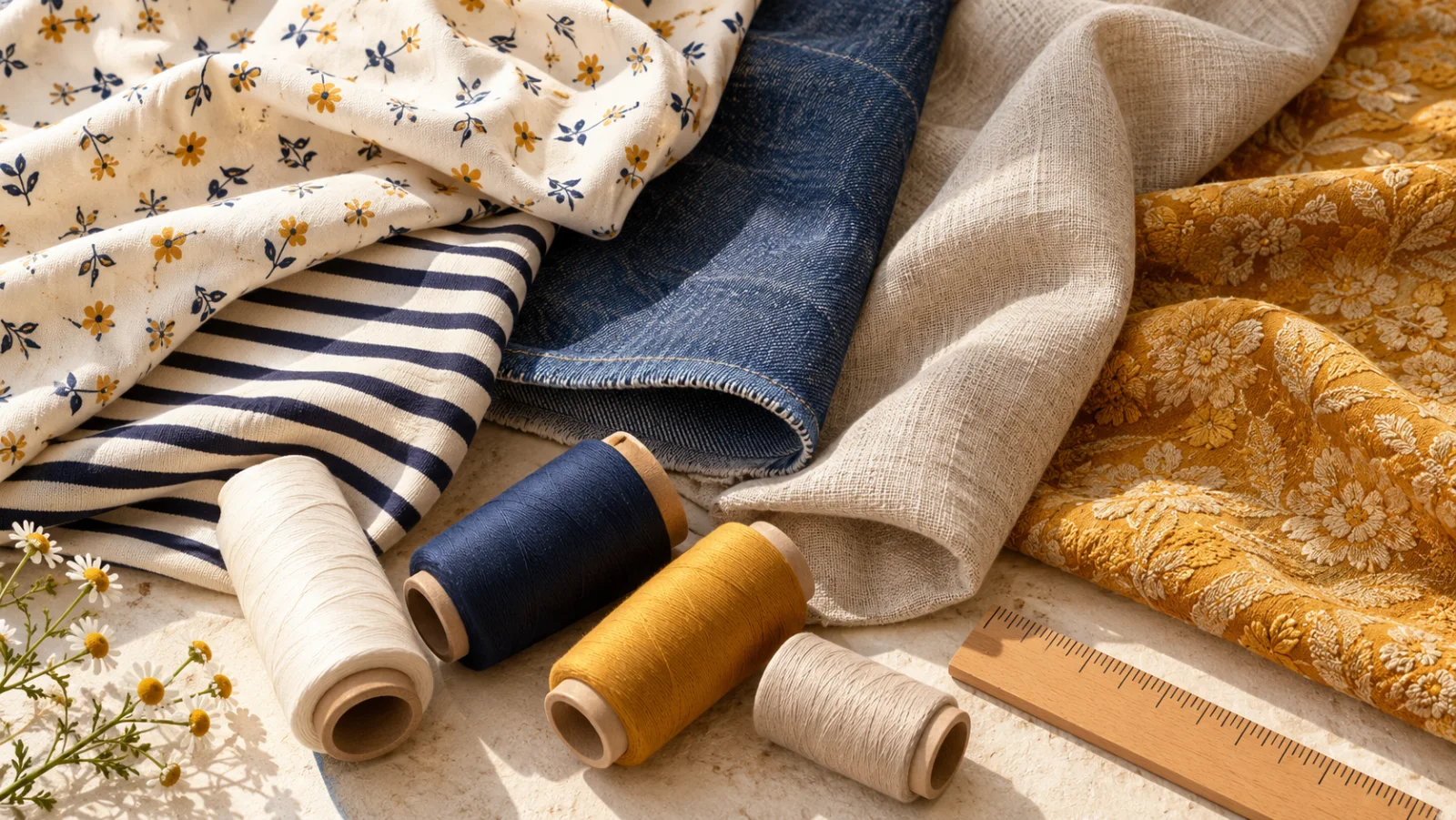
- Compare real swatches and samples because fabrics with the same name can behave differently.
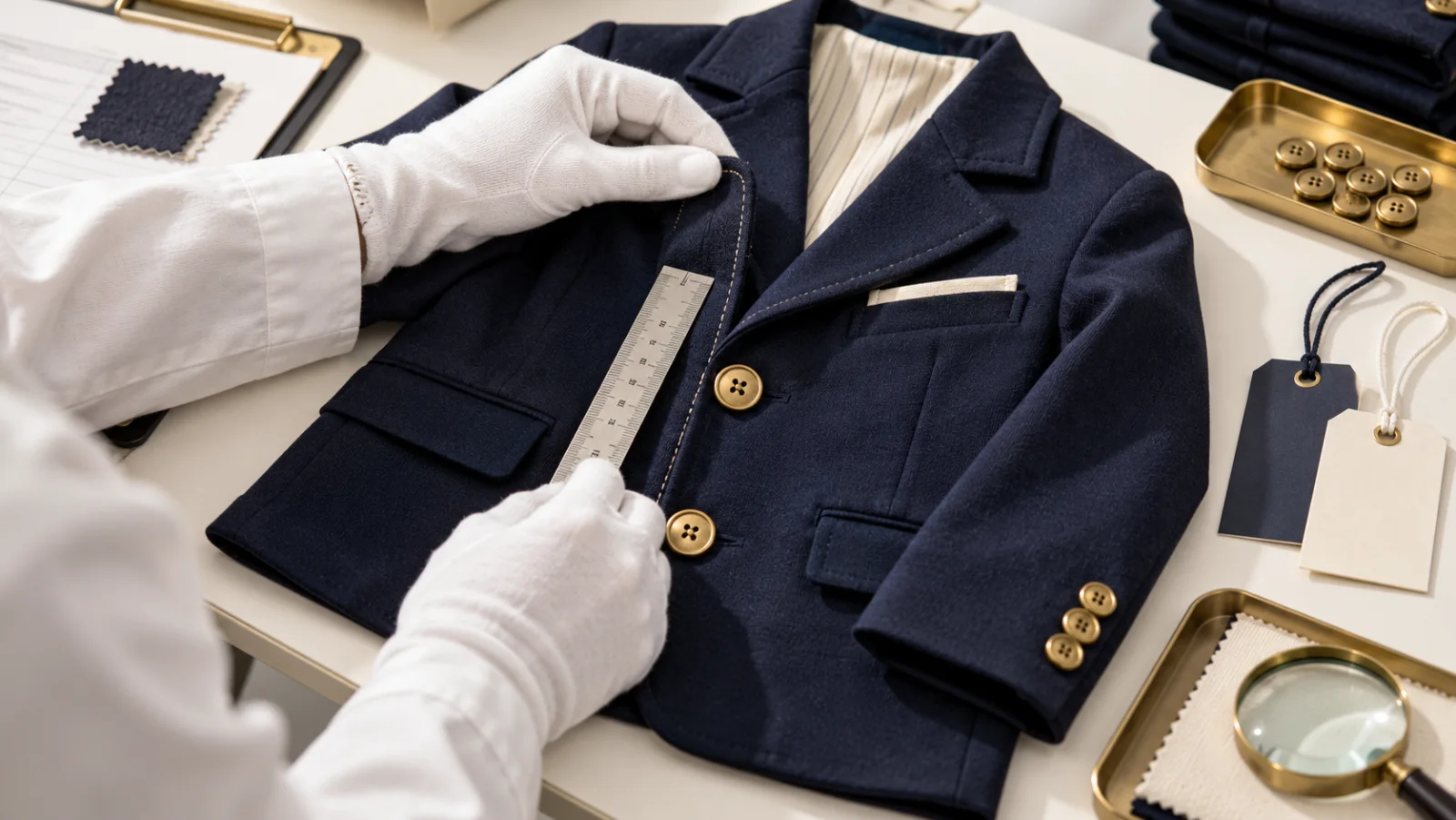
- Assess lining, trims and seam construction with the main fabric.
- Approve colour and performance expectations before bulk cutting.
Use a fabric decision framework
Begin with five questions: What is the garment? When and where will it be worn? How much movement is needed? What structure or drape should it have? How will the customer care for it? Price and availability then narrow the realistic options.
A fabric that feels soft in a swatch may become bulky in a multi-layer seam. A structured fabric may look excellent but need thoughtful lining and fit. Always judge it in the intended product.
Cotton wovens for shirts and ethnic styles
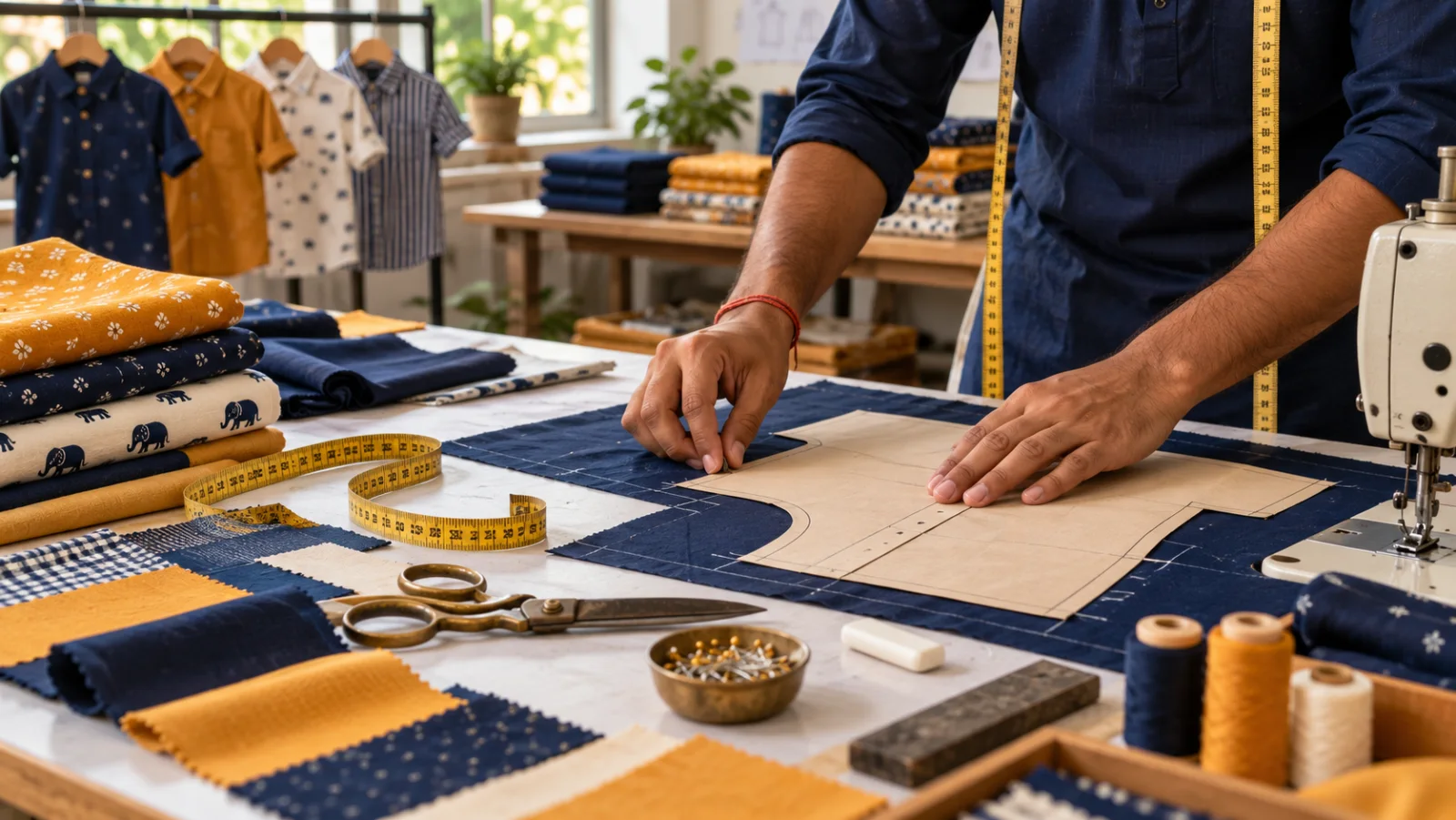
Cotton and cotton-rich woven fabrics are widely used because they can offer comfort, breathability and many surface directions. Poplin-like constructions can suit shirts; textured or decorative wovens can support kurtas and coordinated sets.
Fibre content alone does not determine quality. Weight, yarn, weave, finish, shrinkage behaviour, colour and construction all matter. Request the actual bulk reference rather than approving only a verbal description.
Knits for movement and everyday dressing
Jersey and other knitted constructions naturally support movement and can work well for T-shirts, tops and coordinated leisure sets. Check recovery, opacity, surface stability and how the knit behaves at necklines, hems and pockets.
For hosiery sets, the top and bottom should be evaluated together for weight, stretch, colour and wash appearance.
Denim and structured casual fabrics
Denim provides a familiar casual look and can range from soft, flexible qualities to more structured options. For childrenswear, review weight, seam bulk, movement, surface finish and colour-transfer expectations with the garment construction.
See how Hello Brother combines comfort-led tops and denim-inspired bottoms in our hosiery to denim collection.
Occasion fabrics, linings and embellishment
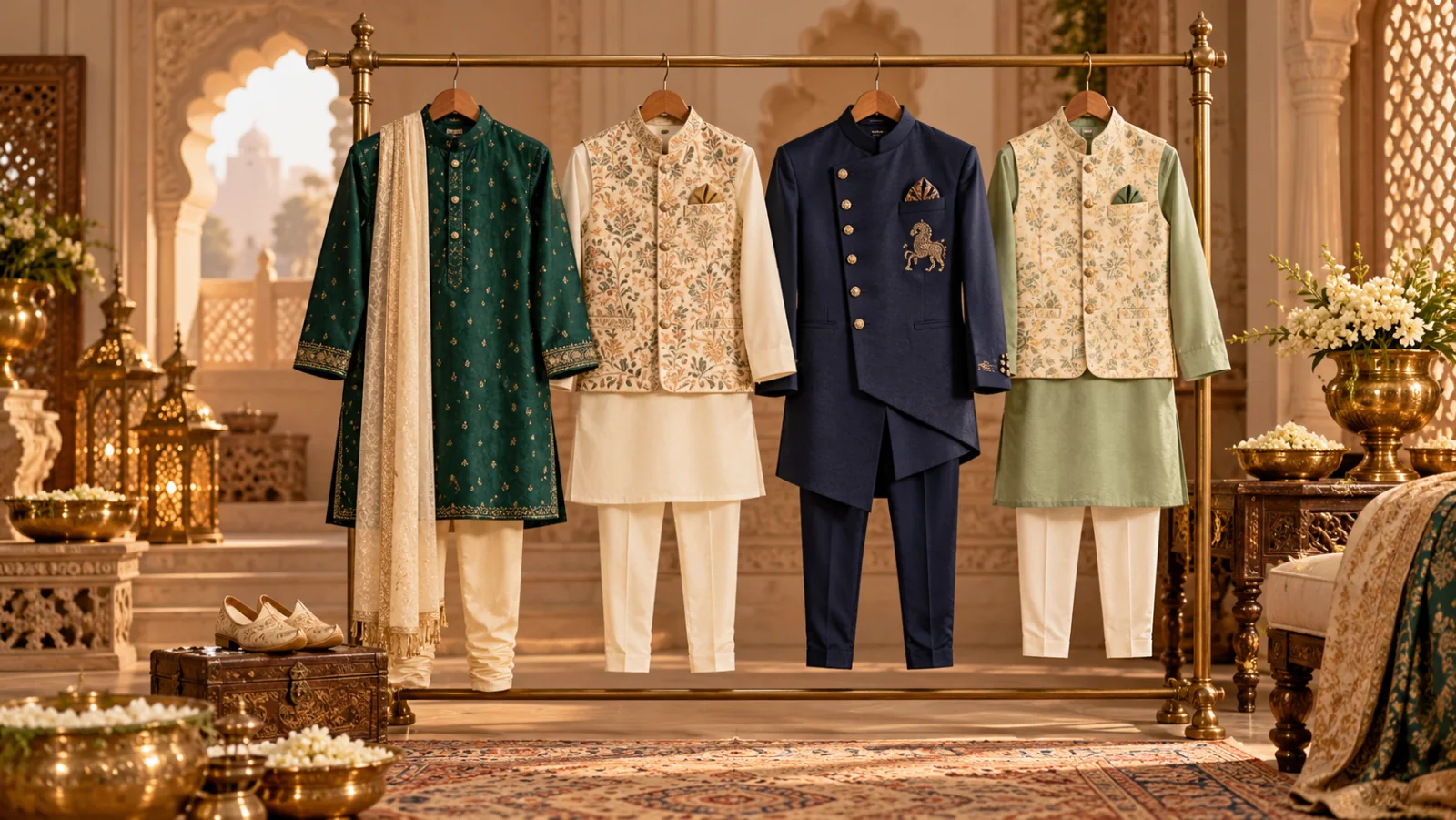
Jacquards, textured wovens and other decorative materials can create depth for festive and formal styles. The internal experience matters just as much: lining, seam finish and backing should prevent uncomfortable contact and allow the garment to sit correctly.
Evaluate embroidery, buttons and decorative placements for appearance, attachment and garment balance. More decoration is not automatically more premium.
Blends and performance expectations
Blended fabrics can combine characteristics such as shape retention, ease of care, drape or durability. Their suitability still depends on the exact construction and finish. Avoid broad assumptions that one fibre combination is always superior.
Define the performance that matters for the product, then discuss appropriate evaluation or testing with the manufacturer and qualified specialists.
Approve fabric through a garment sample
Review shade, hand feel and visible surface, but also make the product. Sampling shows how the fabric cuts, stitches, presses, hangs and feels at seams. Keep an approved reference for bulk comparison.
Fabric selection is stage two of the kids wear manufacturing process. For a sourcing conversation, share the category, season, quantity and intended price position through our enquiry page.
Common questions
Frequently asked questions
Which fabric is best for children’s everyday clothes?
There is no single best option. Soft cotton-rich wovens and comfortable knits are common choices, but the right fabric depends on garment construction, climate, movement, durability and care needs.
Is cotton always better for kids clothing?
Cotton can be a strong choice, but fibre content alone does not determine comfort or quality. Weave or knit, weight, finish, seams, care and the complete garment also matter.
How should a buyer approve kidswear fabric?
Review an actual swatch and colour, confirm the specification, evaluate it in a garment sample and keep an approved reference for bulk production.