Quick answer
What buyers need to know
Private label kids clothing is developed or produced by a manufacturing partner and sold under the buyer’s brand. The buyer defines the customer, collection direction and brand details; the manufacturer supports product development, sourcing, sampling, production, quality checks, labels and packing according to the agreed scope.
Key takeaways
- Start with a customer and product brief—not a logo alone.
- Clarify which party owns design, sourcing, labels, packaging and approvals.
- Treat the approved sample and written specification as the production standard.
- Launch a focused collection, learn from sell-through and scale deliberately.
Private label versus ready wholesale stock
Ready wholesale stock is selected from an existing supplier range and normally reaches market faster. Private label gives the buyer greater control over design direction, labels and presentation, but requires development decisions, approvals and production planning.
Neither model is automatically better. A retailer testing a category may begin with wholesale stock, while a brand with a defined customer and repeatable point of view may benefit from private label. Some businesses use both.
Build the brand brief around a real customer
Describe who will buy the collection, where it will be sold, the intended price position and why the product deserves space in the market. Translate that into categories, size ranges, fabric direction, colours, styling level and launch timing.
Avoid starting with too many categories. A tight opening range—such as coordinated festive sets or smart everyday dressing—makes design, inventory and communication easier to control.
Decide the development scope
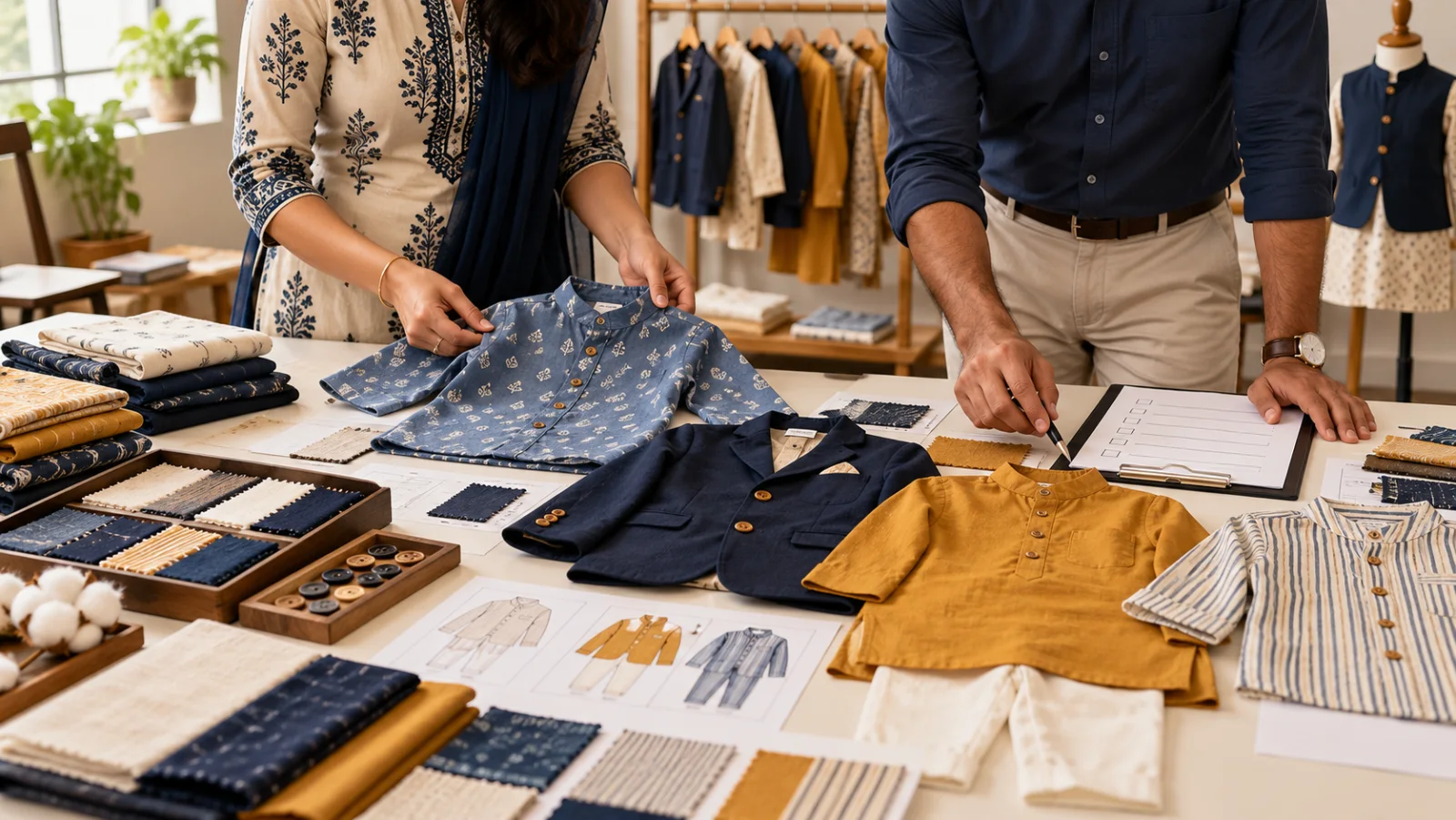
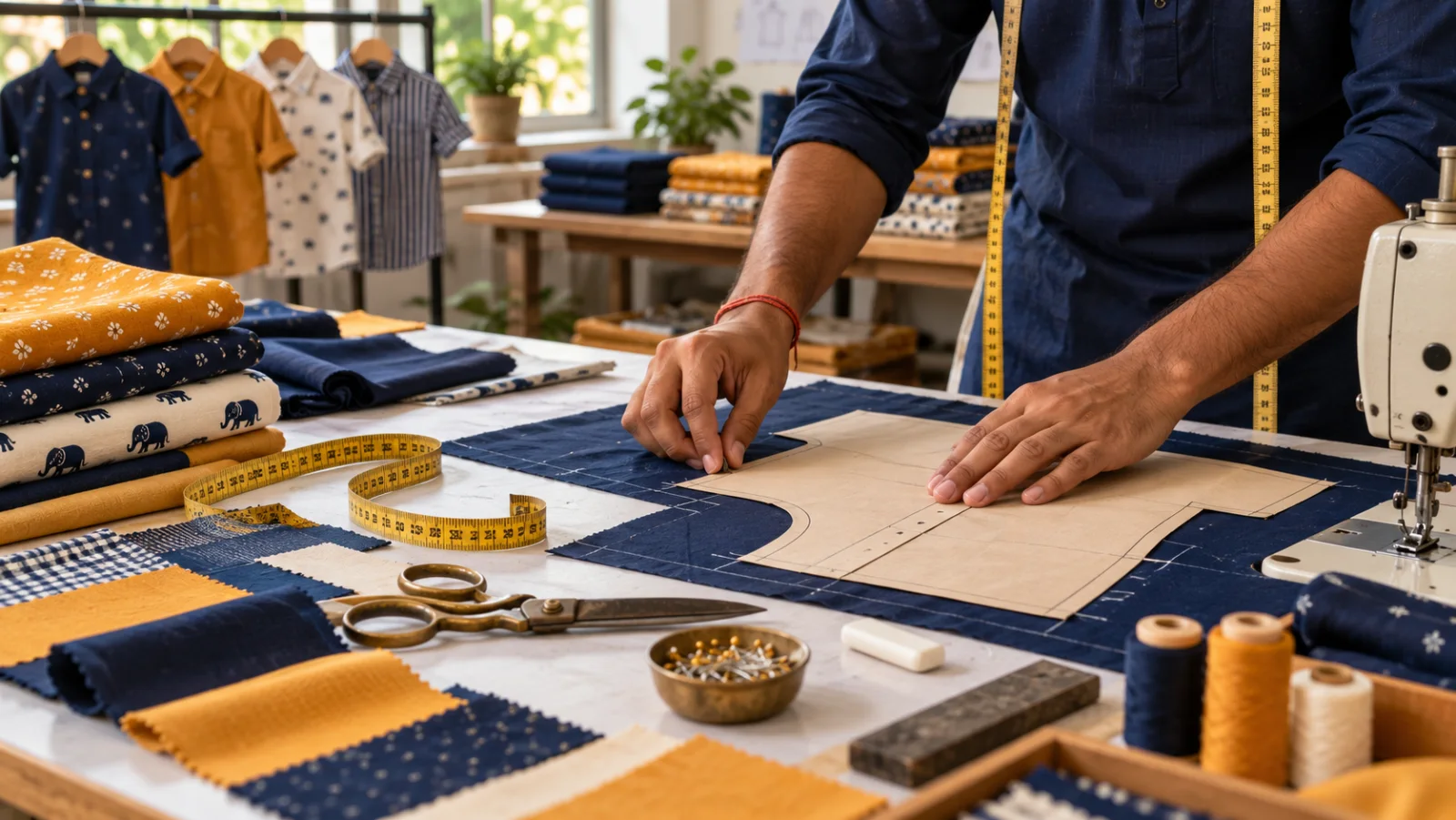
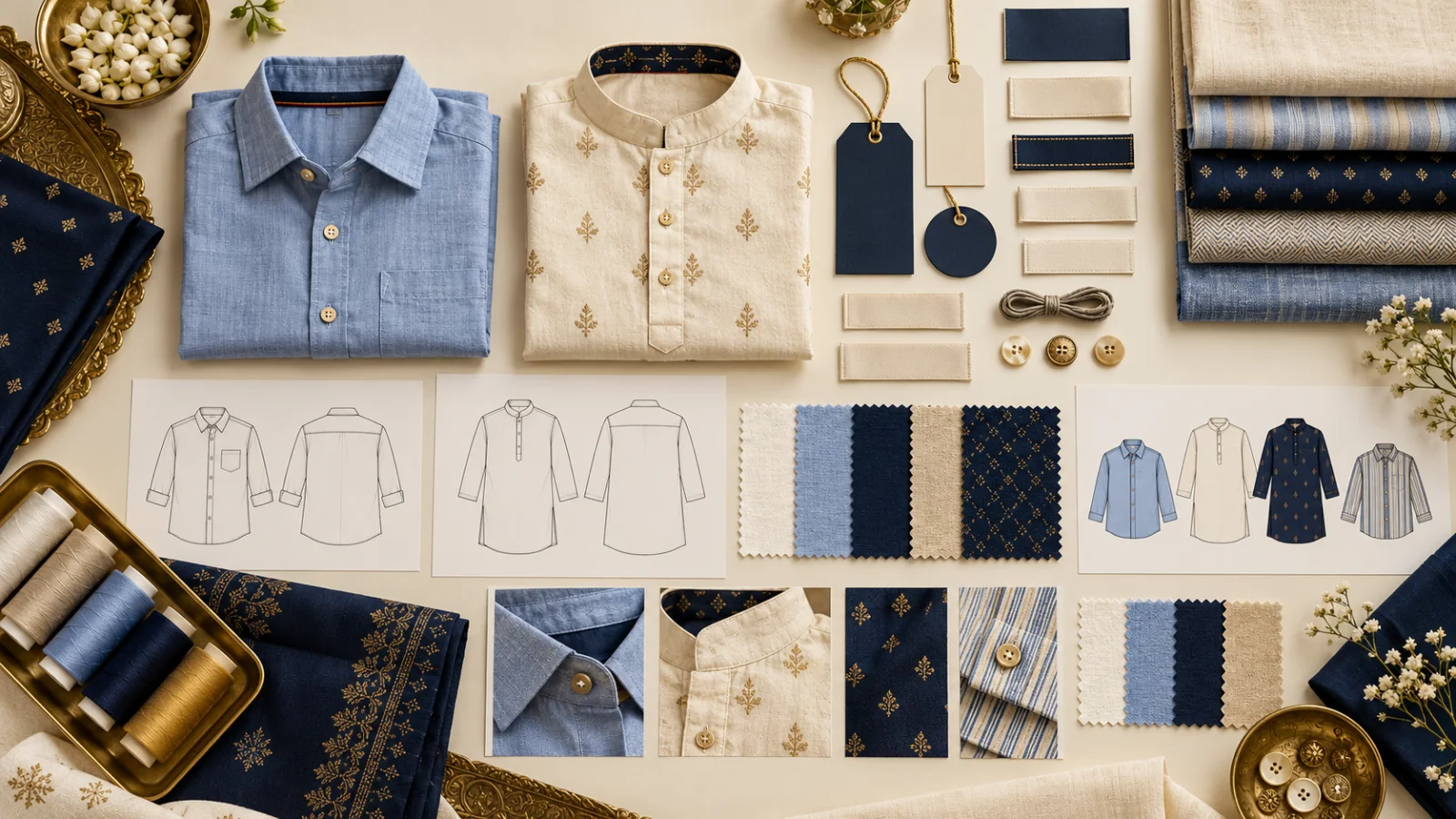
Private-label support can range from applying a brand identity to existing product directions through to developing patterns and samples from a detailed brief. Agree which services are included: design interpretation, fabric sourcing, patterns, sampling, grading, labels, hang tags, packaging and dispatch.
If you already have technical packs, confirm the file and measurement requirements. If you have only references, allow time for the manufacturer to convert them into an original, producible garment.
Prepare labels and packaging correctly
Share brand assets in usable formats and provide approved wording, size presentation, placement and packing instructions. Do not leave label decisions until bulk garments are finished. The manufacturer needs enough lead time to source and approve each component.
Branding should feel consistent from the garment to the packet and carton. It should also remain practical for production and retail handling.
Approve materials, fit and the sealed sample
Review actual fabric and trim references rather than relying only on screen colour. Fit the sample for the intended age group, inspect internal comfort and record every correction. Once approved, the sealed sample, size chart and written construction notes form the bulk standard.
The full kids wear manufacturing process guide explains what happens after the sample is approved.
Understand the main cost and timing drivers
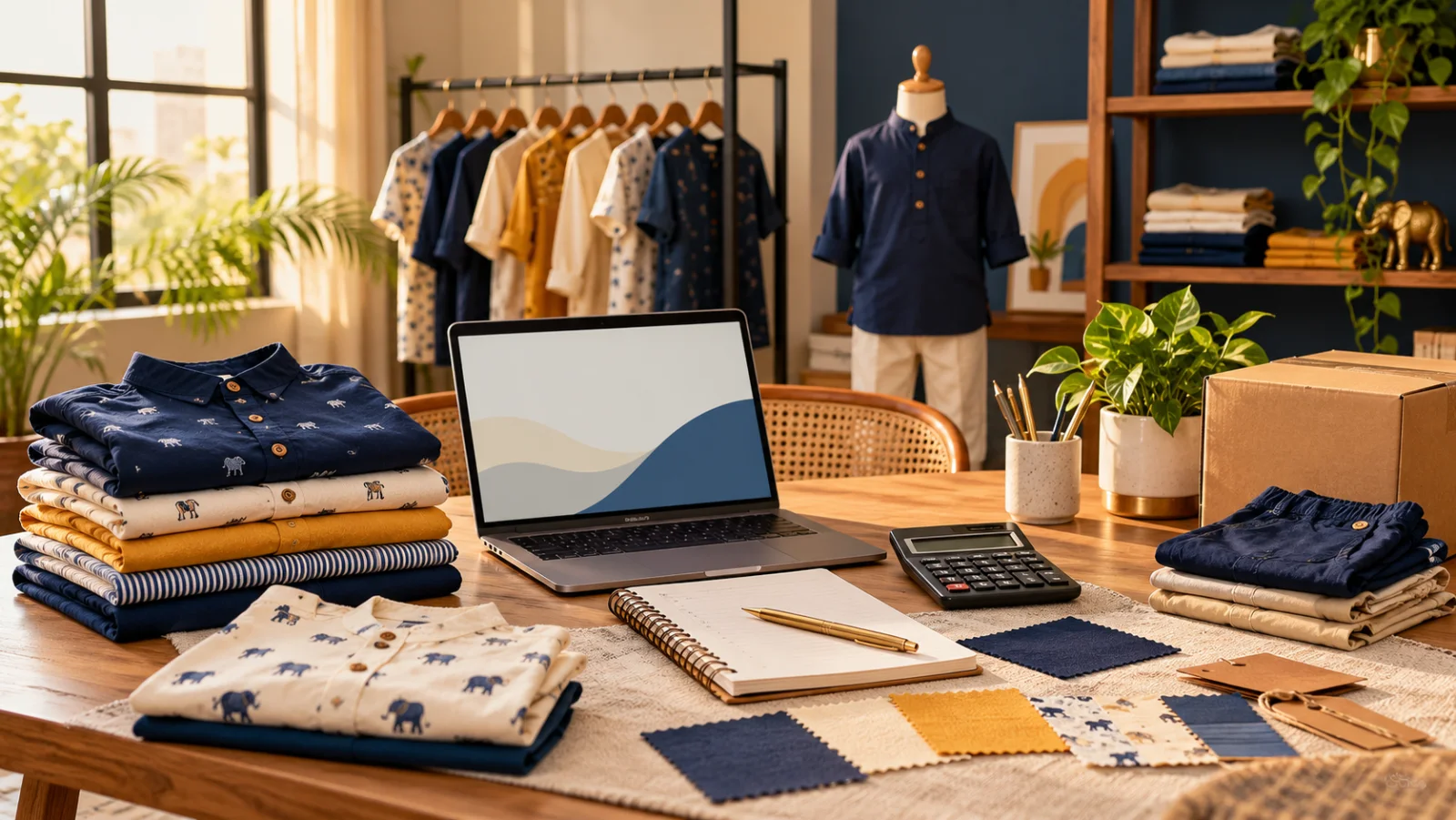
Fabric, trims, construction complexity, embellishment, wash or finish, order quantity, size mix, label development and packing all affect cost. Timing changes with material availability, number of sampling rounds and production loading.
Ask for an itemised scope and milestone plan. This creates a better basis for comparison than a single figure with no specification behind it.
Plan the first launch for learning
Your first collection should answer specific questions: which categories attract customers, which sizes move, what feedback repeats and which styles deserve replenishment. Capture that information from day one.
Hello Brother supports retailers and private-label buyers across boys’ ethnic, formal and everyday categories. Explore our current collection direction or share a private-label brief with the team.
Common questions
Frequently asked questions
What does private label clothing mean?
It means clothing produced by a manufacturing partner and sold under the buyer’s own brand, with the development and branding scope agreed between both parties.
Do I need my own designs for private label kidswear?
Not always. Some manufacturers can interpret a brand and product brief, while others require technical packs. Confirm the development service before you begin.
What should be ready before contacting a private label manufacturer?
Prepare your customer profile, categories, size range, design direction, target price position, expected quantity, launch date and required brand or packaging elements.