Quick answer
What buyers need to know
To buy kids clothes wholesale for resale, define your customer and price position, build a focused category and size plan, compare representative samples, confirm minimum quantities and terms, calculate landed cost, and agree the reorder and delivery process before placing the order.
Key takeaways
- Buy for a defined customer rather than for personal taste.
- Balance choice with enough depth in the sizes that sell.
- Inspect samples and compare the same specification across suppliers.
- Calculate landed cost and cash tied up in stock before confirming quantities.
Begin with your store’s customer
Write down the age groups, occasions, price expectations and shopping patterns you actually serve. A neighbourhood value retailer, premium occasion boutique and online marketplace seller need different products even when all three sell childrenswear.
Use past sales where available. If the business is new, keep the first buying thesis narrow enough to test: for example, boys’ wedding wear in selected sizes or coordinated everyday sets for a specific price band.
Create an assortment architecture
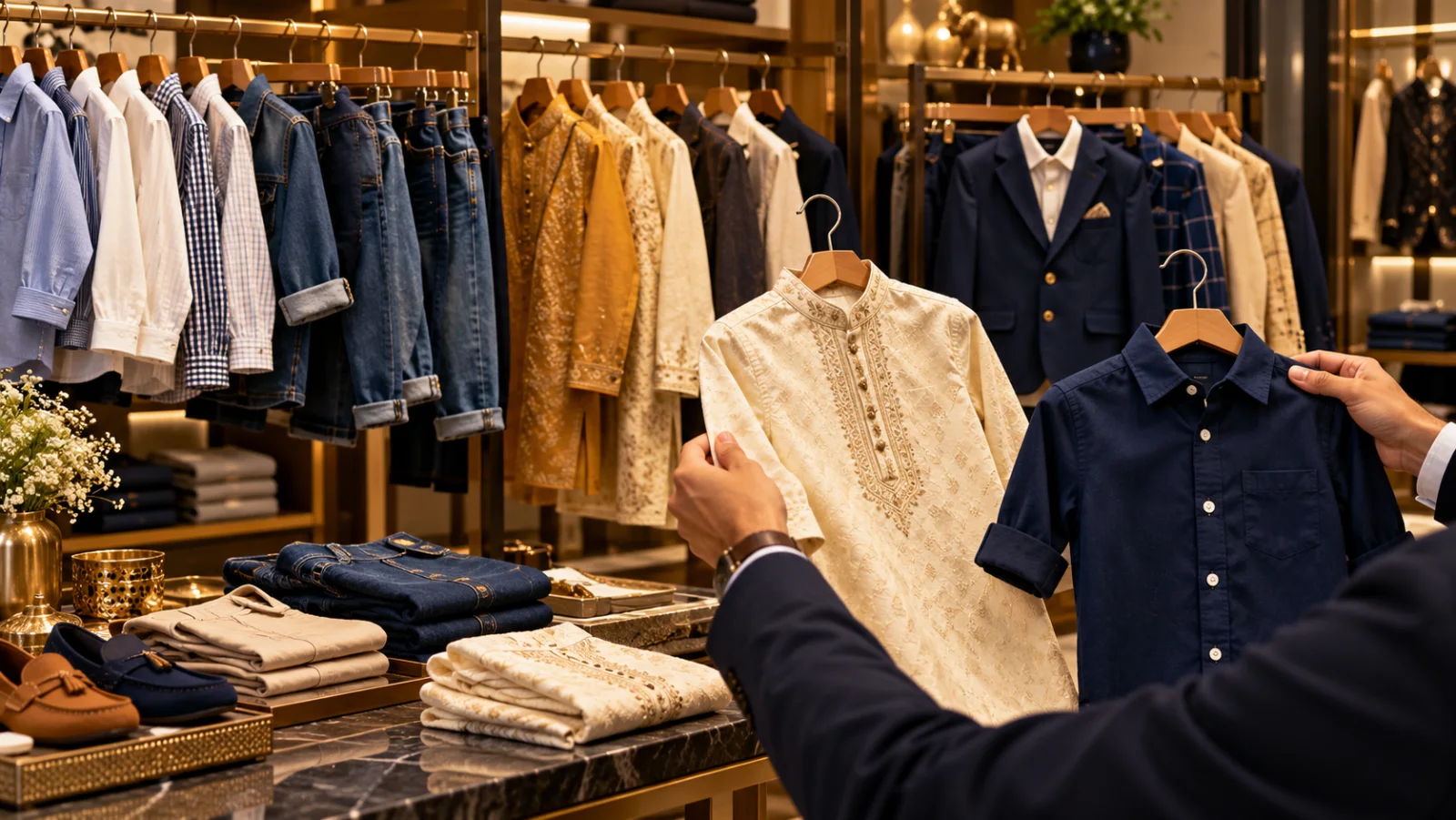
Divide the order into roles. Core styles give dependable volume, seasonal styles create relevance, occasion pieces provide visual impact and experimental styles test new demand. Give each role a planned share of the budget.
Across children’s wholesale clothing, variety can become expensive when every colour and design carries its own size run. Choose meaningful options rather than repeating near-identical pieces.
Choose a supplier model
A wholesaler may offer ready stock and quick selection. A manufacturer may provide deeper development, planned production or private-label support. Marketplaces make discovery easy but still require seller and sample verification.
Use the manufacturer checklist when comparing a long-term source. The right model depends on speed, differentiation, quantity and how much product control you need.
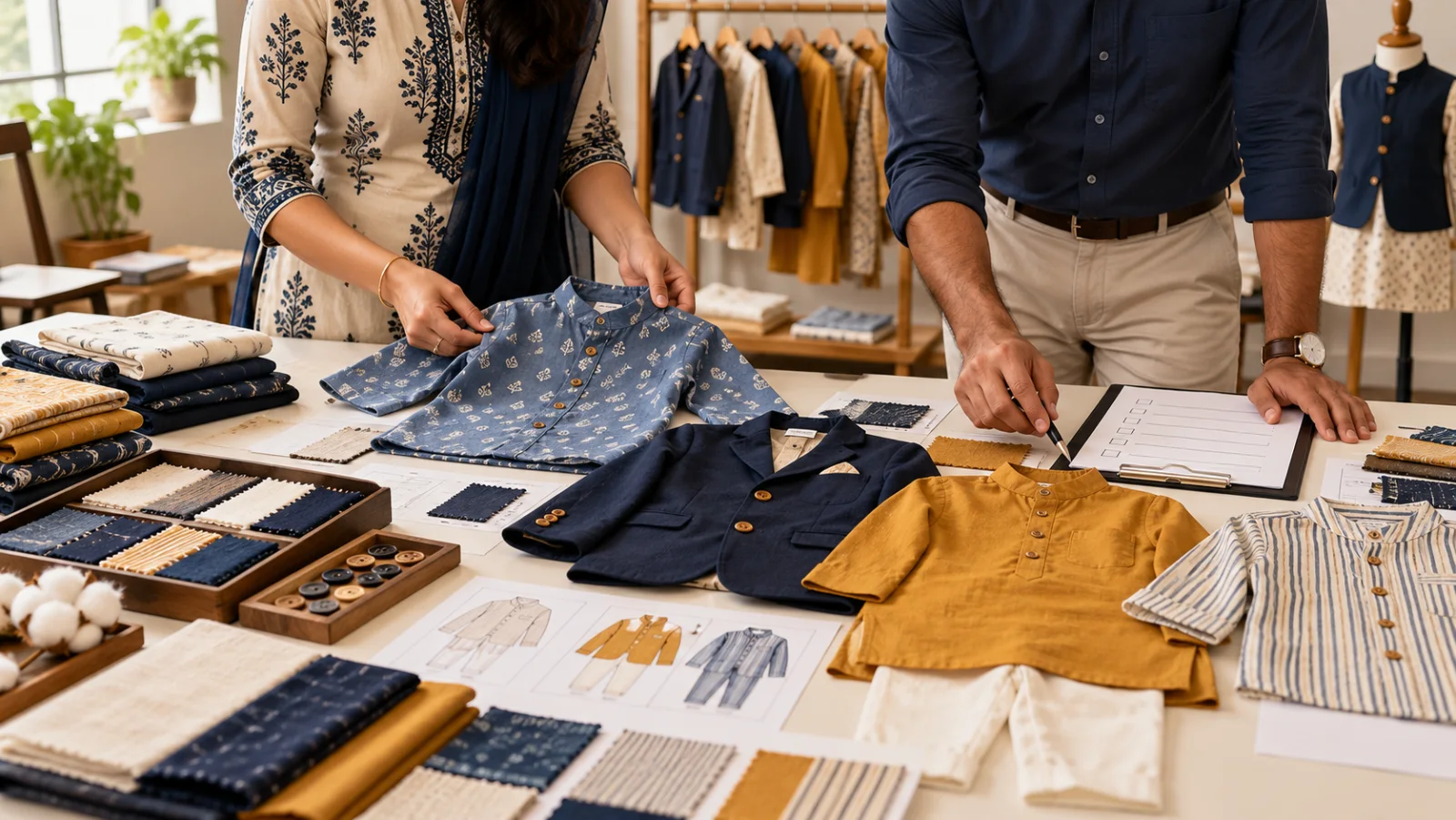
Inspect samples like a customer will
Check first impression, touch, ease of dressing, internal comfort, measurements, stitching, closures and finishing. View the garment both on a hanger and as a complete outfit. Confirm whether the sample reflects the exact bulk specification.
For categories such as boys kurta pajama or blazer sets, review all layers together and check that decorative features do not compromise comfort.
Plan sizes with evidence
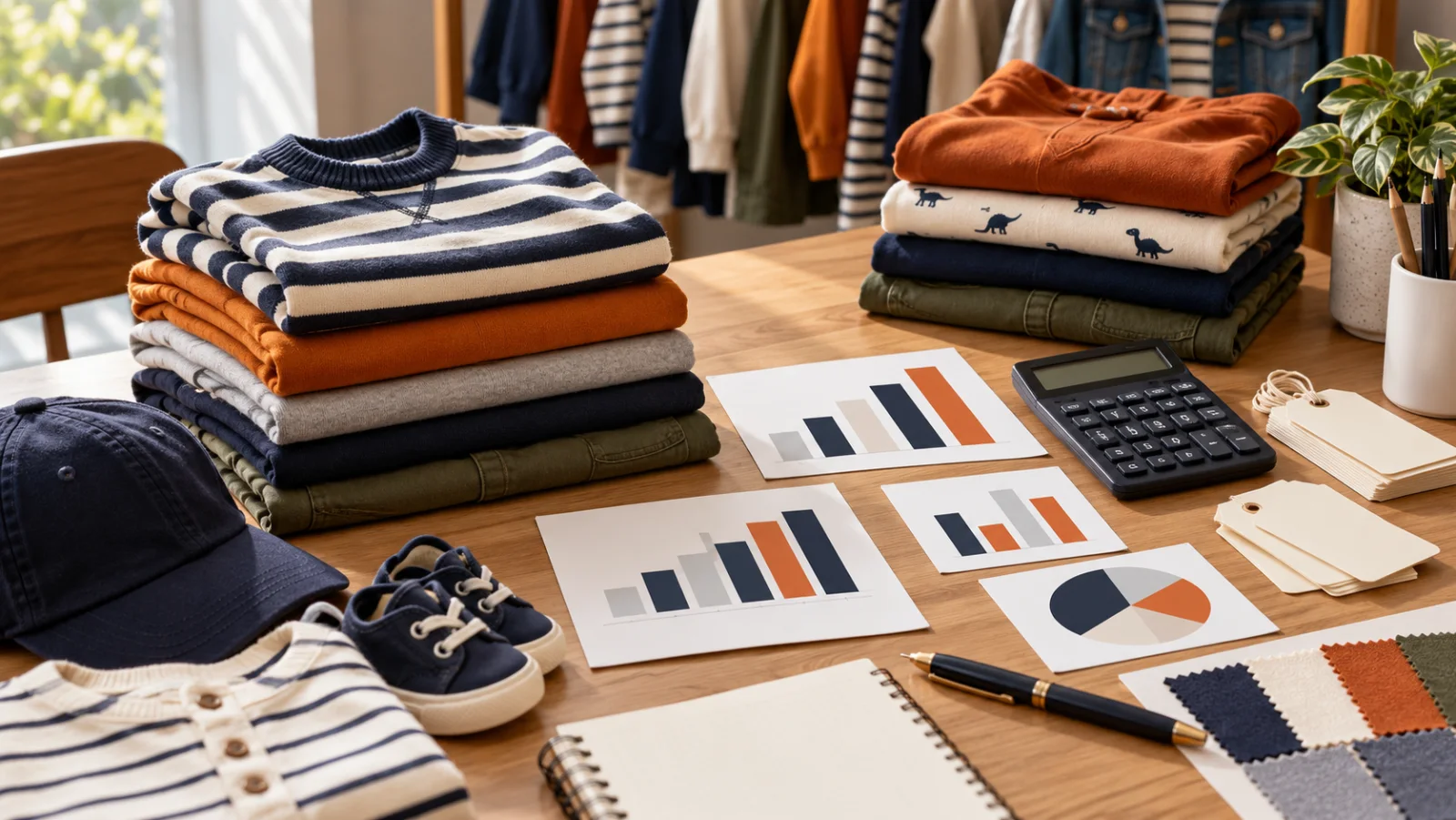
Equal quantities in every size may look simple but rarely match demand. Use store data, customer profile and the category to shape the size curve. Keep the plan visible when comparing styles so attractive designs do not consume the whole budget in slow sizes.
Ask how sizes are packed and whether mixed size or colour assortments are possible. Clear carton-level information saves time during receiving.
Calculate landed cost and stock exposure
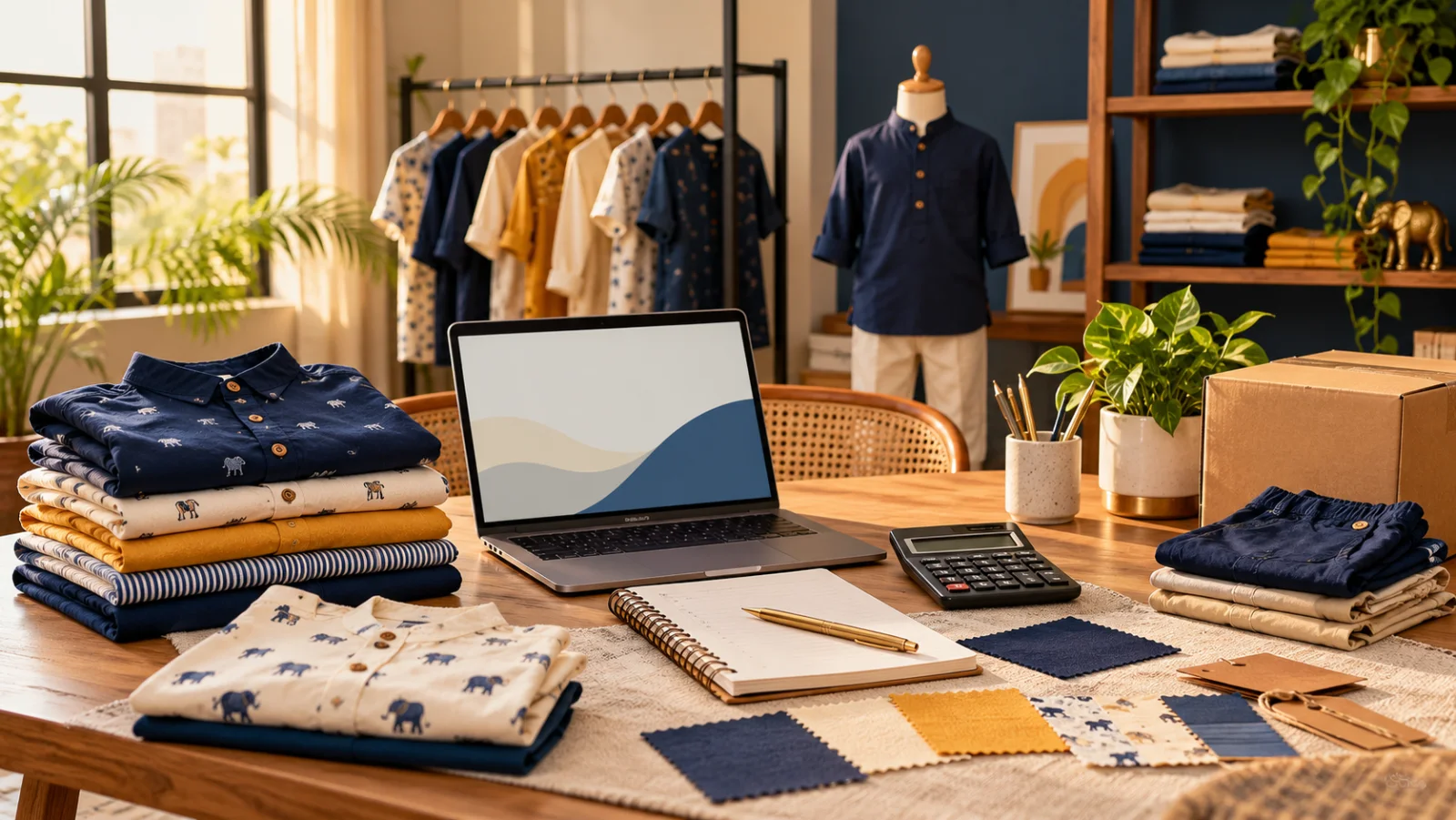
Landed cost includes more than the quoted garment price. Include applicable taxes, transport, handling, packaging changes, payment costs and expected markdown exposure. Then compare the intended selling price with the full cost and operating model.
Also consider how much cash the order holds and how quickly it needs to turn. A strong-looking margin cannot compensate for stock that remains unsold.
Confirm terms, delivery and reorders
Record the product specification, quantity, size and colour split, rate, tax treatment, payment terms, packing, dispatch responsibility and delivery estimate. Ask what can be repeated and whether material or colour may change between runs.
Ready to source? Browse our boys wear wholesale collections and then request current availability and catalogue details.
Common questions
Frequently asked questions
Where can I buy wholesale children’s clothes for resale?
You can source from manufacturers, established wholesalers, physical wholesale markets and verified B2B platforms. Compare samples, business details, terms and delivery capability before ordering.
How many styles should a first wholesale order include?
There is no universal number. Choose enough styles to present a coherent range while preserving size depth and keeping the investment within a level your business can test and replenish.
What is a size curve?
A size curve is the planned quantity of each size within a style. It should reflect the customer profile and actual sales rather than automatically using equal quantities.